🗣️ Classroom Conversation: Present Indefinite Tense Rules & Examples (Easy Guide)
(दृश्य: अमित सर क्लास में मुस्कुराते हुए प्रवेश करते हैं। बोर्ड पर बड़े अक्षरों में लिखा है—PRESENT INDEFINITE TENSE। प्रिया और रोहन अपनी नोटबुक के साथ तैयार बैठे हैं।)
अमित सर: Hello, my dear friends! आज हम अंग्रेजी भाषा पर महारत हासिल करने की दिशा में एक और महत्वपूर्ण कदम उठाने जा रहे हैं। आज की क्लास में हम सीखेंगे—Present Indefinite Tense (जिसे Simple Present Tense भी कहा जाता है)।
प्रिया: सर, इस टेंस का इस्तेमाल हम असल जिंदगी में कब करते हैं?
अमित सर: बहुत अच्छा सवाल है, प्रिया! इस Tense का उपयोग उन कार्यों को दर्शाने के लिए किया जाता है जो हमारी आदत (Habitual), नियमित दिनचर्या (Daily Routines), या ऐसे सार्वभौमिक तथ्य (General/Universal Truths) होते हैं जो हमेशा सच रहते हैं। जैसे: “मैं स्कूल जाता हूँ” या “सूरज पूर्व से उगता है।”
🔍 हिंदी वाक्यों में इस Tense की पहचान कैसे करें?
रोहन: सर, जब हमारे सामने कोई हिंदी वाक्य आए, तो हमें कैसे पता चलेगा कि यह Present Indefinite ही है?
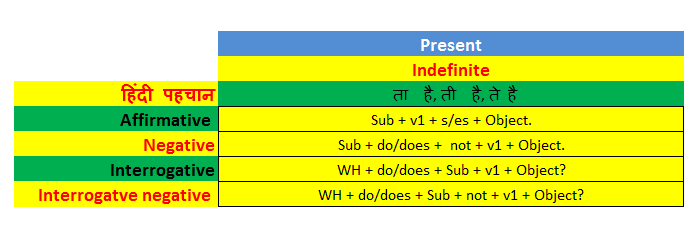
अमित सर: इसका एक बहुत ही सरल साउंड मार्कर (ध्वनि चिह्न) है, रोहन। हिंदी में इस tense की मुख्य पहचान यह है कि वाक्य का अंत हमेशा “ता है / ती है / ते हैं / ती हैं” से होता है। यह अंत हमें कर्ता (Subject) के लिंग (Gender) और वचन (Number) के बारे में सब कुछ बता देता है:
1. ता है (Masculine Singular / पुल्लिंग एकवचन): यह दर्शाता है कि क्रिया करने वाला केवल एक लड़का या पुरुष है।
उदाहरण: वह स्कूल जाता है। (He goes to school.)
2. ती है (Feminine Singular / स्त्रीलिंग एकवचन): यह दर्शाता है कि क्रिया किसी एक लड़की या महिला द्वारा की जा रही है।
उदाहरण: वह गाना गाती है। (She sings a song.)
3. ते हैं (Plural / बहुवचन – पुल्लिंग या मिश्रित समूह): इसका उपयोग पुरुषों के समूह, मिश्रित समूह, या किसी बड़े व्यक्ति को आदर (Respect) देने के लिए होता है।
उदाहरण: वे क्रिकेट खेलते हैं। (They play cricket.)
4. ती हैं (Plural – Feminine Only / बहुवचन – केवल स्त्रीलिंग): यहाँ ‘हैं’ में अनुस्वार (बिंदी) की ध्वनि होती है, जो यह सुनिश्चित करती है कि पूरा समूह केवल महिलाओं या लड़कियों का है।
उदाहरण: लड़कियाँ पढ़ती हैं। (The girls study.)
❓ Interrogative Sentences (प्रश्नवाचक वाक्यों की शुरुआत कैसे करें?)
प्रिया: सर, जब हमें इस टेंस में प्रश्न पूछना हो, तो वाक्यों की शुरुआत कैसे होगी? इसमें बहुत भ्रम होता है!
अमित सर: यह भ्रम आज हमेशा के लिए दूर हो जाएगा! अंग्रेजी में प्रश्नवाचक वाक्य दो अलग-अलग नियमों के आधार पर शुरू होते हैं:
Rule 1: “Yes / No” Questions (Helping Verb से शुरुआत)
यदि किसी प्रश्न का उत्तर केवल “हाँ” या “ना” में दिया जा सकता है (और हिंदी वाक्य “क्या” शब्द से शुरू होता है), तो अंग्रेजी वाक्य की शुरुआत हमेशा Helping Verb (Do/Does) से होती है।
स्ट्रक्चर: Helping Verb + Subject + Main Verb + Object?
उदाहरण: क्या वह स्कूल जाता है? – Does he go to school? (उत्तर: हाँ / ना)
Do or Does Ka use
1. ‘Do’ का प्रयोग (Use of Do)
‘Do’ का प्रयोग Plural Subjects (बहुवचन कर्ता) और I, You, We, They के साथ किया जाता है।
Rule: Subject (I / You / We / They / Plural Nouns) + Do
Examples (उदाहरण):
Main Verb (मुख्य क्रिया – करना):
English: I do my work on time.
Hindi: मैं अपना काम समय पर करता हूँ।
English: They do yoga every morning.
Hindi: वे हर सुबह योग करते हैं।
Negative Sentences (Do not / Don’t – नहीं करना):
English: We do not (don’t) like junk food.
Hindi: हम जंक फूड पसंद नहीं करते हैं।
English: You do not go to school on Sundays.
Hindi: आप रविवार को स्कूल नहीं जाते हैं।
Interrogative Sentences (प्रश्नवाचक – क्या…?):
English: Do you speak English?
Hindi: क्या आप अंग्रेजी बोलते हैं?
English: Do they play cricket here?
Hindi: क्या वे यहाँ क्रिकेट खेलते हैं?
2. ‘Does’ का प्रयोग (Use of Does)
‘Does’ का प्रयोग Singular Subjects (एकवचन कर्ता) जैसे He, She, It, This, That या किसी एक नाम (Ram, Sita) के साथ किया जाता है।
Rule: Subject (He / She / It / Singular Nouns) + Does
Note: जब वाक्य में ‘Does’ का प्रयोग होता है, तो मुख्य क्रिया (Main Verb) से ‘s’ या ‘es’ हट जाता है।
Examples (उदाहरण):
Main Verb (मुख्य क्रिया – करना):
English: She does her homework efficiently.
Hindi: वह अपना गृहकार्य कुशलता से करती है।
English: Rahul does exercise daily.
Hindi: राहुल रोज व्यायाम करता है।
Negative Sentences (Does not / Doesn’t – नहीं करना):
English: He does not (doesn’t) drink tea.
Hindi: वह चाय नहीं पीता है। (Note: drink आया है, drinks नहीं)
English: It does not rain here in December.
Hindi: यहाँ दिसंबर में बारिश नहीं होती है।
Interrogative Sentences (प्रश्नवाचक – क्या…?):
English: Does she know the answer?
Hindi: क्या वह उत्तर जानती है?
English: Does Amit teach English?
Hindi: क्या अमित अंग्रेजी पढ़ाते हैं?
Rule 2: “Information” Questions (Wh- Words से शुरुआत)
यदि प्रश्न का उत्तर केवल हाँ या ना में नहीं दिया जा सकता, बल्कि कोई जानकारी (Information) देनी पड़े (और हिंदी वाक्य के बीच में कब, क्यों, कहाँ, क्या आए), तो वाक्य की शुरुआत Wh- word (What, Why, Where, When, How आदि) से होती है।
स्ट्रक्चर: Wh- Word + Helping Verb + Subject + Main Verb + Object?
उदाहरण: आप कहाँ रहते हैं? – Where do you live? (उत्तर: मैं दिल्ली में रहता हूँ।)
💡 अमित सर की क्विक टिप:
क्या वाक्य के शुरुआत में आए? – Helping Verb से शुरू करें!
क्या, क्यों, कहाँ, कब वाक्य के बीच में आए? – Wh- Word से शुरू करें!
Part 1: जब Subject हो Plural या I, We, You, They
रोहन: सर, जब सब्जेक्ट के रूप में I, We, You, और They (मैं / हम / तुम / आप / वे) आएं, तो वाक्य रचना के क्या नियम होंगे?
अमित सर: इन सब्जेक्ट्स के साथ नियम बेहद सीधा और सरल है, रोहन—इनके साथ वर्ब का हमेशा Base Form (V1) ही आता है, और क्रिया में कोई -s या -es नहीं लगाया जाता। आइए इसके सभी रूप देखते हैं:
| वाक्य का प्रकार | स्ट्रक्चर (Structure) | लाइव उदाहरण (Example) |
| Affirmative (सकारात्मक) | Subject + V1 + Object | वे क्रिकेट खेलते हैं। They play cricket. |
| Negative (नकारात्मक) | Subject + do not (don’t) + V1 + Object | वे क्रिकेट नहीं खेलते हैं। They do not play cricket. |
| Interrogative (प्रश्नवाचक) | Do + Subject + V1 + Object? | क्या वे क्रिकेट खेलते हैं? -Do they play cricket? |
| Negative-Interrogative | Don’t + Subject + V1 + Object? | क्या वे क्रिकेट नहीं खेलते हैं? Don’t they play cricket? |
| Wh-word Interrogative | Wh-word + do + Subject + V1 + Object? | वे क्रिकेट कहाँ खेलते हैं? Where do they play cricket? |
| Wh-word Neg-Int | Wh-word + don’t + Subject + V1 + Object? | वे क्रिकेट क्यों नहीं खेलते हैं? Why don’t they play cricket? |
👤 Part 2: जब Subject हो Third Person Singular (He, She, It, Name)
प्रिया: और सर, जब सब्जेक्ट में He (वह-पुरुष), She (वह-स्त्री), It (यह), या किसी का भी Name (जैसे राम, सीमा) आए, तब क्या बदलाव होता है?
अमित सर: यहाँ कहानी में एक बहुत ही दिलचस्प मोड़ आता है, प्रिया! क्योंकि ये सभी Third Person Singular Subjects (एकवचन कर्ता) हैं, इसलिए इनके नियम थोड़े अलग और बेहद महत्वपूर्ण हैं:
⚠️ सबसे ज़रूरी नियम:
Affirmative (सकारात्मक) वाक्यों में वर्ब के बेस फॉर्म के साथ हमेशा -s या -es जोड़ा जाता है।
जैसे ही वाक्य Negative या Interrogative बनता है और वाक्य में Does / Doesn’t का प्रयोग होता है, मुख्य क्रिया से -s या -es पूरी तरह हट जाता है और वर्ब अपने शुद्ध Base Form (V1) में वापस आ जाती है।
आइए इसके स्ट्रक्चर्स और उदाहरणों को टेबल के माध्यम से समझते हैं:
| वाक्य का प्रकार | स्ट्रक्चर (Structure) | लाइव उदाहरण (Example) |
| Affirmative (सकारात्मक) | Subject + V1 + s/es + Object | वह स्कूल जाता है। He goes to school. |
| Negative (नकारात्मक) | Subject + does not (doesn’t) + V1 + Object | वह स्कूल नहीं जाता है। He does not go to school. |
| Interrogative (प्रश्नवाचक) | Does + Subject + V1 + Object? | क्या वह स्कूल जाता है?
|
| Negative-Interrogative | Doesn’t + Subject + V1 + Object? | क्या वह स्कूल नहीं जाता है? Doesn’t he go to school? |
| Wh-word Interrogative | Wh-word + does + Subject + V1 + Object? | वह आपका इंग्लिश ब्लॉग क्यों पढ़ता है? Why does he read your English blog? |
| Wh-word Neg-Int | Wh-word + doesn’t + Subject + V1 + Object? | वह इंग्लिशएरा ब्लॉग्स क्यों नहीं पढ़ता है? Why doesn’t he read EnglishEra blogs? |
Present Indefinite Tense: Master Reference Table
| Subject Group | वाक्य का प्रकार (Sentence Type) | वाक्य संरचना (Sentence Structure) | इंग्लिश उदाहरण (English Example) | हिंदी अनुवाद (Hindi Translation) |
I / We / You (Plural / First & Second Person Rules) | Affirmative | Subject + V1 + Object |
| मैं फुटबॉल खेलता हूँ। हम अंग्रेज़ी पढ़ते हैं। |
| Negative | Subject + do not (don’t) + V1 + Object | You do not watch TV. | तुम टीवी नहीं देखते हो। | |
| Interrogative | Do + Subject + V1 + Object? | Do they live here? | क्या वे यहाँ रहते हैं? | |
| Negative Interrogative | Don’t + Subject + V1 + Object? | Don’t you know him? | क्या तुम उसे नहीं जानते हो? | |
| Wh- Interrogative | Wh-word + do + Subject + V1 + Object? | Where do you go? | तुम कहाँ जाते हो? | |
| Wh- Neg Interrogative | Wh-word + don’t + Subject + V1 + Object? | Why don’t we try this? | हम यह कोशिश क्यों नहीं करते हैं? | |
She / It (Third Person Singular Rules) | Affirmative | Subject + V1 + s/es + Object | She writes a letter. It works properly. | वह पत्र लिखती है। यह ठीक से काम करता है। |
| Negative | Subject + does not (doesn’t) + V1 + Object | She does not cook food. | वह खाना नहीं बनाती है। | |
| Interrogative | Does + Subject + V1 + Object? | Does it rain in July? | क्या जुलाई में बारिश होती है? | |
| Negative Interrogative | Doesn’t + Subject + V1 + Object? | Doesn’t she study hard? | क्या वह कड़ी पढ़ाई नहीं करती है? | |
| Wh- Interrogative | Wh-word + does + Subject + V1 + Object? | When does she wake up? | वह कब उठती है? | |
| Wh- Neg Interrogative | Wh-word + doesn’t + Subject + V1 + Object? | Why doesn’t it work? | यह काम क्यों नहीं करता है? |
🎓 Conclusion: अमित सर का मास्टर रीकैप
अमित सर: तो मेरे प्यारे दोस्तों, आज की क्लास का सार यह है कि Present Indefinite Tense में जब सब्जेक्ट प्लूरल (या I, We, You, They) हो, तो बिना किसी बदलाव के सिर्फ V1 और Do का प्रयोग करें। लेकिन जब सब्जेक्ट सिंगुलर (He, She, It, Name) हो, तो सकारात्मक में V1 + s/es लगाएं और नकारात्मक/प्रश्नवाचक में Does आते ही क्रिया का -s/-es हटा दें।
रोहन और प्रिया (एक साथ): थैंक यू सो मच अमित सर! अब हमें प्रेजेंट इंडेफिनेट टेंस के नियमों में कभी कोई कंफ्यूजन नहीं होगा!
Happy Learning, and keep practicing with EnglishEraWithAmitPoonia!
मेरे प्यारे दोस्तों, अंग्रेज़ी व्याकरण (English Grammar) पर पूरी तरह महारत हासिल करने के लिए आपको सभी 12 टेन्सेस को क्रम से और गहराई से पढ़ना चाहिए। नीचे दी गई लिंक्स पर क्लिक करके आप हमारे सभी महत्वपूर्ण और विस्तृत गाइड्स को पढ़ सकते हैं: Rules, Structures, and Translation Guide
1. Present Tense (वर्तमान काल)
Present Indefinite Tense Learn All possible Uses with(Why)
2. Past Tense (भूतकाल)
3. Future Tense (भविष्य काल)